
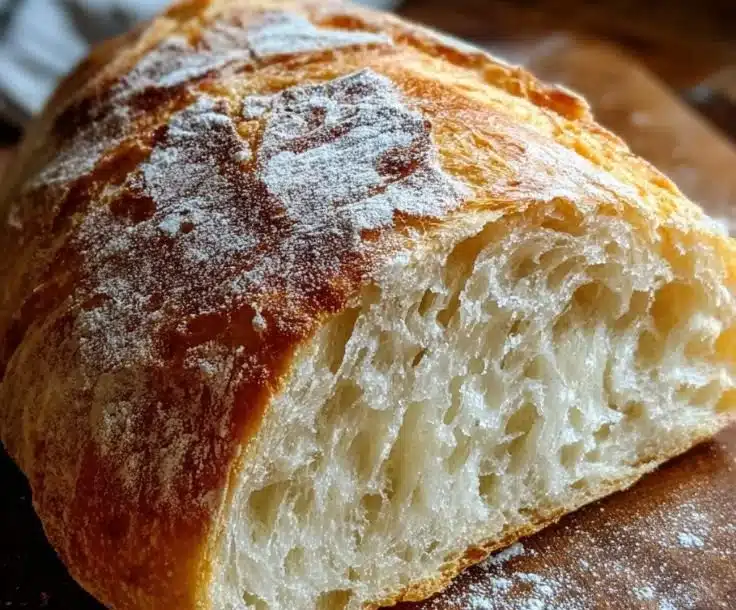


Why make this recipe
Making a Rustic French Bread Loaf at home is more than just a cooking project; it’s a delightful experience. The process connects you to the traditions of French baking, filling your kitchen with the warm, comforting aroma of freshly baked bread. This bread offers a beautiful crust and a light, airy interior, perfect for any meal or occasion. Plus, nothing beats the satisfaction of tasting a loaf you’ve made from scratch.
In our increasingly fast-paced world, taking the time to make bread can feel like a reward in itself. It’s a chance to slow down, enjoy the process, and enjoy something wonderfully delicious at the end. Baking bread can also be a great way to engage with your family. Everyone can pitch in and learn the basics of bread-making together.
How to make Rustic French Bread Loaf
Making Rustic French Bread Loaf is simple and rewarding. Here’s the step-by-step breakdown to guide you through the process.
Ingredients
- 410 grams all-purpose flour
- 1 teaspoon granulated sugar
- 1 teaspoon fine salt
- 1.5 teaspoons active dry yeast
- 300 milliliters warm water (38 – 46 °C)
Directions
-
Activate the yeast: Start by combining the active dry yeast, warm water, and sugar in a mixing bowl. Allow it to rest for about 5 minutes. This step is crucial as it lets the yeast activate, causing it to become foamy.
-
Mix the ingredients: Once the yeast is foamy, add half of the flour and the salt to the yeast mixture. Using a stand mixer with a dough hook, knead the mixture on medium-low speed. As you knead, gradually add the remaining flour until the dough begins to form and is sticky to the touch.
-
First rise: Transfer the kneaded dough to a lightly floured bowl, and cover it with a clean towel. Let it rise at room temperature for about 2 hours or until it has doubled in size.
-
Shape the dough: After the first rise, place the dough onto a well-floured surface or parchment paper. Shape it gently into a smooth ball, dust with additional flour if needed, and cover with a large inverted bowl. Allow it to rise again for 30 more minutes.
-
Preheat the oven: While the dough is rising, preheat your oven to 220 °C. Place a Dutch oven with its lid inside to heat for about 20 minutes.
-
Score the dough: After the second rise, score the top of the dough with a sharp knife. This allows the bread to expand properly as it bakes.
-
Bake the bread: Carefully place the dough onto parchment paper and into the heated Dutch oven. Bake it covered for 30 minutes. After that, remove the lid and bake for an additional 10 minutes until the bread turns golden brown. If you’re using a baking sheet, reduce the baking time to about 35 minutes. To ensure doneness, the internal temperature of the bread should reach approximately 99 °C.
-
Cool and store: Remove the bread from the oven and transfer it to a wire rack to cool completely before slicing. This step is essential because cutting into the bread too soon can give you a gummy texture. Store the cooled bread in an airtight container at room temperature for 3-5 days.
Nutritional benefits
Rustic French Bread Loaf not only satisfies cravings but also provides nutritional benefits. The main ingredient, all-purpose flour, is a good source of carbohydrates and protein. When made with whole grain flour, bread can offer increased fiber, important for digestive health. This loaf has no preservatives or artificial ingredients, making it a wholesome choice.
Baking your bread also gives you control over the ingredients, allowing you to adjust the sugar and salt content to suit your dietary preferences. Enjoying homemade bread in moderation can complement a balanced diet, providing energy and satisfaction.
What to Serve With Rustic French Bread Loaf
Rustic French Bread Loaf is incredibly versatile. Here are some delightful ideas on what to serve it with:
- Soups: Its hearty crust is perfect for dipping into savory soups like butternut squash or tomato basil.
- Salads: Pair it with a fresh salad, like a classic Caesar or a simple mixed greens salad, to soak up the dressing.
- Dips: Serve it alongside creamy dips, such as hummus or spinach artichoke dip, for a tasty appetizer.
- Cheeses: A cheese board featuring a mix of soft and hard cheeses pairs beautifully with the rustic bread.
- Spreadable items: Use it as a base for bruschetta with toppings like tomatoes, basil, and balsamic glaze.
Why You’ll Love This
You’ll love Rustic French Bread Loaf because it offers a combination of great taste and texture. The crunchy crust contrasts nicely with the soft, airy inside. It’s satisfying to eat and makes any meal feel special. Additionally, the simplicity of the recipe allows you to enjoy the process without complicated steps.
Baking your bread can be a therapeutic experience, offering a break from the hustle of daily life. The rewarding smell that fills your home as the bread bakes will draw in family and friends, making every baking day a special occasion.
How to store Rustic French Bread Loaf
To keep your Rustic French Bread Loaf fresh, store it in an airtight container at room temperature. If you want to keep it for longer than 3-5 days, consider freezing it. To do this, wrap the loaf tightly in plastic wrap and place it in a freezer bag. When you’re ready to enjoy it again, thaw it at room temperature and reheat it in the oven to restore the crustiness.
Tips and mistakes to avoid
-
Use the right water temperature: Make sure your warm water is not too hot or too cold. Aim for 38-46 °C. Water that is too hot can kill the yeast, while too cold water will not activate it properly.
-
Don’t rush the rising process: Allowing sufficient time for the dough to rise is important for texture. Rushing this step can result in dense bread.
-
Flour your surface well: When shaping the dough, make sure your surface is floured to prevent sticking. This will help maintain the dough’s smooth texture.
-
Be careful with the oven temperature: Ensure your oven is calibrated correctly. An oven that is too hot or too cool can affect the baking time and result in a poorly baked loaf.
Variation
While Rustic French Bread Loaf is delicious on its own, feel free to experiment with variations. Consider adding herbs or spices to the dough for extra flavor. You might try rosemary, thyme, or even garlic powder. For a sweeter option, integrate honey or cinnamon for a unique twist. You can also add seeds like sunflower or sesame for added texture and nutrition.
FAQs
1. Can I use whole wheat flour instead of all-purpose flour?
Yes, you can substitute whole wheat flour. However, the texture will be denser. Consider using half all-purpose and half whole wheat if you’d like a lighter loaf.
2. How can I tell when the bread is baked correctly?
Check the internal temperature with a thermometer; it should reach around 99 °C. The crust should be golden brown and hard when it’s done. Tapping the bottom of the loaf should produce a hollow sound.
3. What can I do if my dough doesn’t rise?
If your dough hasn’t risen, it may be due to inactive yeast. Check the expiration date on your yeast and ensure your water was the right temperature. If needed, try again with fresh yeast or adjust the water temperature.
By following these steps, tips, and serving ideas, your Rustic French Bread Loaf will surely impress everyone and become a beloved staple in your home. Enjoy this delightful recipe, and happy baking!
Print
Rustic French Bread Loaf
- Total Time: 55 minutes
- Yield: 1 loaf 1x
- Diet: Vegetarian
Description
A delightful and simple recipe for making Rustic French Bread Loaf at home, yielding a beautiful crust and light, airy interior.
Ingredients
- 410 grams all-purpose flour
- 1 teaspoon granulated sugar
- 1 teaspoon fine salt
- 1.5 teaspoons active dry yeast
- 300 milliliters warm water (38 – 46 °C)
Instructions
- Activate the yeast: Combine the active dry yeast, warm water, and sugar in a mixing bowl and allow it to rest for about 5 minutes until foamy.
- Mix the ingredients: Add half of the flour and the salt to the yeast mixture and knead with a stand mixer, gradually adding the remaining flour until the dough is sticky.
- First rise: Transfer the kneaded dough to a floured bowl, cover, and let it rise for about 2 hours or until doubled in size.
- Shape the dough: Place the dough on a floured surface, shape it into a ball, cover with a bowl, and let it rise for 30 minutes.
- Preheat the oven: Preheat your oven to 220 °C and place a Dutch oven inside to heat for 20 minutes.
- Score the dough: After the second rise, score the top of the dough with a sharp knife.
- Bake the bread: Place the dough into the heated Dutch oven and bake covered for 30 minutes, then remove the lid and bake for an additional 10 minutes until golden brown.
- Cool and store: Remove the bread from the oven and cool on a wire rack before slicing.
Notes
Ensure the water temperature is just right and do not rush the rising process for the best texture.
- Prep Time: 15 minutes
- Cook Time: 40 minutes
- Category: Bread
- Method: Baking
- Cuisine: French
Nutrition
- Serving Size: 1 slice
- Calories: 150
- Sugar: 1g
- Sodium: 400mg
- Fat: 1g
- Saturated Fat: 0g
- Unsaturated Fat: 0g
- Trans Fat: 0g
- Carbohydrates: 31g
- Fiber: 1g
- Protein: 4g
- Cholesterol: 0mg