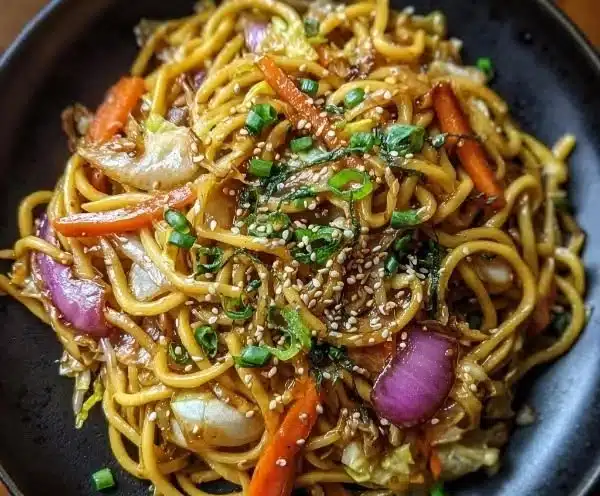

How to make Hibachi-Style Noodles
Hibachi-style noodles are a delightful dish that showcases a beautiful mix of flavors and textures. They are quick to make and can easily be customized to suit your taste preferences. Here’s how to create this delicious recipe at home.
Ingredients
- Wheat noodles
- Bell peppers
- Onions
- Mushrooms
- Scallions
- Garlic
- Soy sauce
- Butter
- Marinated chicken, shrimp, or tofu (optional)
- Sesame seeds (for garnish)
- Lemon wedge (for garnish)
- Cucumber salad (for serving)
Directions
- Cook the wheat noodles according to package instructions. Drain and set aside.
- In a wok or grill pan, heat some oil over medium-high heat.
- Add diced bell peppers, onions, and mushrooms, and stir-fry for about 3-4 minutes until they begin to soften.
- Stir in sliced scallions and minced garlic, cooking for an additional minute.
- Add the cooked noodles to the pan along with soy sauce and butter, tossing to coat the noodles and vegetables evenly.
- For added protein, mix in marinated chicken, shrimp, or tofu, cooking until heated through.
- Serve hot, garnished with sesame seeds and a lemon wedge, alongside cucumber salad.
Why You’ll Love This Hibachi-Style Noodles
Hibachi-style noodles are loved for many reasons. First, they are incredibly versatile. You can adjust the ingredients to fit your dietary needs and taste preferences. Whether you prefer chicken, shrimp, or plant-based options like tofu, this recipe caters to everyone.
The flavors in this dish are exciting yet simple. The combination of soy sauce, garlic, and fresh vegetables makes each bite a burst of delight. Plus, preparing this dish is quick, and most of the ingredients might already be in your kitchen. It’s a perfect meal for a busy weeknight or when you’re craving something tasty but don’t want to spend hours cooking.
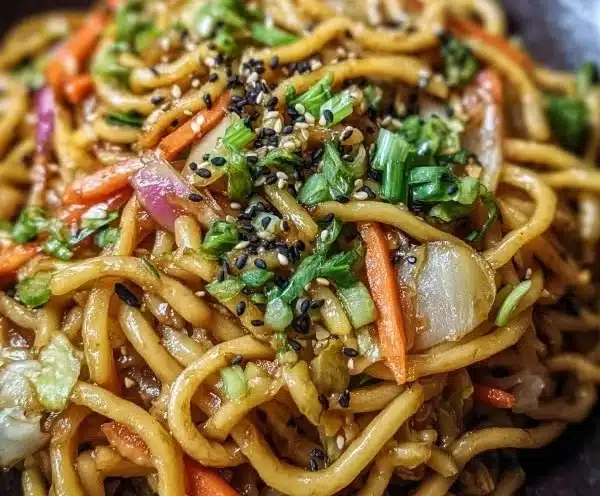
Nutriments Benefits
Hibachi-style noodles offer a variety of nutritional benefits. Wheat noodles are a good source of carbohydrates, which provide the energy you need for your day. They also contain fiber, especially if you use whole wheat varieties. The vegetables included in this dish, such as bell peppers, onions, and mushrooms, provide essential vitamins and minerals.
Bell peppers are rich in Vitamin C, which helps boost your immune system. Mushrooms provide important nutrients like selenium and B vitamins. Adding protein from marinated chicken, shrimp, or tofu can also enhance the nutrition profile of this dish. Tofu, for example, is an excellent source of plant-based protein and contains various beneficial minerals.
What to Serve With Hibachi-Style Noodles
Hibachi-style noodles are delicious on their own, but you can enhance your meal by serving them with a few complementary dishes. Here are some great suggestions:
-
Cucumber Salad: Light and refreshing, cucumber salad helps balance the rich flavors of the noodles. It can be made with simple ingredients like sliced cucumbers, vinegar, and sesame oil.
-
Grilled Vegetables: A side of grilled vegetables works wonderfully with these noodles. You can grill zucchini, asparagus, or any of your favorites.
-
Spring Rolls: Pair the noodles with crispy spring rolls as an appetizer. They add a delicious crunch that goes well with the soft noodles.
-
Edamame: Lightly salted edamame can serve as a tasty side dish that adds another layer of flavor and nutrition.
How to Store Hibachi-Style Noodles
If you have leftovers, storing them is easy. Place the noodles in an airtight container and store them in the refrigerator. They should last for about 3 to 4 days. When you’re ready to eat, gently reheat them in the microwave or on the stove. If the noodles seem dry, add a little extra soy sauce or a splash of water to help bring them back to life.
For long-term storage, consider freezing the noodles. Place them in a freezer-safe container or bag, and they can last for up to three months. When you want to enjoy them again, simply thaw them overnight in the refrigerator before reheating.
Tips and Mistakes to Avoid
To make sure your hibachi-style noodles turn out perfect, keep these tips in mind:
-
Don’t Overcook the Vegetables: Stir-fry the vegetables just until they are tender but still have a crunch. Overcooked vegetables can lose their texture and flavor.
-
Use High Heat: Make sure your pan is hot enough before adding the ingredients. A hot pan helps to stir-fry quickly, keeping the vegetables crisp.
-
Prep Ahead of Time: Chop all your vegetables and have everything ready before you start cooking. It makes the process smoother and more efficient.
-
Don’t Skip the Garnish: Garnishing with sesame seeds and a lemon wedge isn’t just for looks; it adds flavor and enhances the presentation of the dish.
Variation
Feel free to get creative with this dish! Here are a few variations to consider:
-
Protein Switch: Instead of chicken, shrimp, or tofu, you could use beef or pork, depending on your preference.
-
Different Vegetables: Mix and match with other vegetables like snap peas, carrots, or even broccoli. Each adds a unique taste and color to your dish.
-
Spicy Twist: If you like things spicy, add some red pepper flakes or a drizzle of sriracha for a kick.
-
Coconut Noodles: For a tropical flavor, you can replace the soy sauce with coconut aminos and add some coconut milk for creaminess.
FAQs
1. Can I make hibachi-style noodles vegan?
Yes! Just use tofu or skip the protein altogether. The dish can easily be made vegan by using vegetable-based ingredients.
2. How can I make this dish gluten-free?
To make hibachi-style noodles gluten-free, you can use rice noodles or gluten-free soy sauce. Always check the labels to ensure the ingredients meet your dietary needs.
3. Can I prepare hibachi-style noodles in advance?
You can prepare the vegetables and cook the noodles in advance. Just combine and reheat them when you are ready to serve. However, it’s best to cook the vegetables fresh for optimal texture.
Remember that experimenting with different ingredients is part of the fun, so try out your own combinations and enjoy the deliciousness of hibachi-style noodles!
Print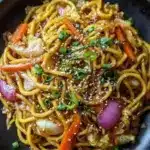
Hibachi-Style Noodles
- Total Time: 30 minutes
- Yield: 4 servings 1x
- Diet: Vegetarian
Description
Quick and flavorful hibachi-style noodles featuring a mix of fresh vegetables and optional protein.
Ingredients
- Wheat noodles
- 1 cup diced bell peppers
- 1 cup diced onions
- 1 cup sliced mushrooms
- 1 cup sliced scallions
- 2 cloves minced garlic
- 3 tablespoons soy sauce
- 2 tablespoons butter
- 1 cup marinated chicken, shrimp, or tofu (optional)
- Sesame seeds (for garnish)
- Lemon wedge (for garnish)
- Cucumber salad (for serving)
Instructions
- Cook the wheat noodles according to package instructions. Drain and set aside.
- Heat some oil in a wok or grill pan over medium-high heat.
- Add diced bell peppers, onions, and mushrooms, and stir-fry for about 3-4 minutes until they begin to soften.
- Stir in sliced scallions and minced garlic, cooking for an additional minute.
- Add the cooked noodles to the pan along with soy sauce and butter, tossing to coat the noodles and vegetables evenly.
- Mix in marinated chicken, shrimp, or tofu, cooking until heated through.
- Serve hot, garnished with sesame seeds and a lemon wedge, alongside cucumber salad.
Notes
Feel free to customize with your favorite vegetables or proteins.
- Prep Time: 15 minutes
- Cook Time: 15 minutes
- Category: Main Course
- Method: Stir-frying
- Cuisine: Japanese
Nutrition
- Serving Size: 1 serving
- Calories: 400
- Sugar: 4g
- Sodium: 600mg
- Fat: 15g
- Saturated Fat: 5g
- Unsaturated Fat: 8g
- Trans Fat: 0g
- Carbohydrates: 55g
- Fiber: 4g
- Protein: 20g
- Cholesterol: 30mg