
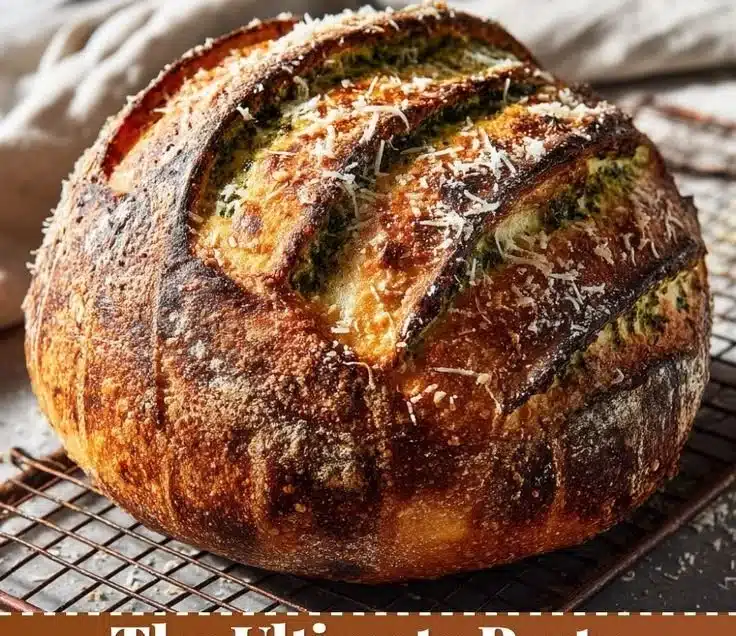

How to make Pesto Parmesan Sourdough
Baking your own bread can be a rewarding and enjoyable experience, and this Pesto Parmesan Sourdough loaf takes it to the next level. With its delightful flavor and artisanal appeal, this bread will impress anyone who tastes it. Here’s how you can make this cheesy artisan loaf at home.
Ingredients
- 100 g active and bubbly sourdough starter (Should be at its peak, 4-6 hours after feeding.)
- 500 g bread flour
- 350 g warm water (around 85°F or 29°C)
- 10 g fine sea salt
- 1/2 cup pesto (Thicker pesto works best.)
- 1 cup freshly grated Parmesan cheese
Directions
-
Feed your sourdough starter. Begin by feeding your sourdough starter 4-6 hours before you plan to mix your dough. This gives it enough time to double in size and become very active.
-
Mix the dough. In a large bowl, combine the bread flour and warm water. Stir until there are no dry spots left. Cover this bowl and let it rest for about 30 to 60 minutes. This process is called autolyse, and it helps to enhance the dough’s texture.
-
Add ingredients. After resting, add the active sourdough starter and fine sea salt to the bowl. Mix thoroughly until everything is well incorporated.
-
Bulk fermentation. Over the next 4-6 hours, perform a series of stretch and folds every 30-45 minutes for the first 2-3 hours of bulk fermentation. This will help develop the dough’s gluten, and it will become smooth and elastic.
-
Incorporate pesto and cheese. Gently stretch the dough into a large rectangle on a floured surface. Spread the pesto evenly over the surface, and sprinkle the grated Parmesan cheese on top. Fold the dough like a letter and then roll it into a tight log.
-
Shape the dough. Next, shape your dough into a boule or batard, which is a round or oval shape. Place it seam-side up in a well-floured banneton. Cover it and refrigerate for a cold proof of 12-24 hours. This slow cold fermentation adds flavor and texture to the bread.
-
Bake. When you’re ready to bake, preheat your oven and Dutch oven to 500°F (260°C). Remove the cold dough from the refrigerator, score the top with a sharp blade, and place it into the hot Dutch oven. Bake covered for 20 minutes. After that, remove the lid, reduce the heat to 450°F (230°C), and bake for another 20-25 minutes until the bread is deeply golden brown.
-
Cool before slicing. Once baked, let the loaf cool completely on a wire rack for at least 2-4 hours before slicing. This step is crucial for the crumb to set properly and will result in a better texture.
Why You’ll Love This Pesto Parmesan Sourdough
This Pesto Parmesan Sourdough is not just any bread; it is filled with incredible flavors and has a rustic appearance that makes it special. You’ll enjoy the rich taste of Parmesan combined with the aromatic, nutty flavor of pesto. Whether enjoyed fresh with olive oil, used for sandwiches, or paired with a hearty soup, this loaf will elevate any meal.
Nutritional Benefits
A slice of Pesto Parmesan Sourdough is not only flavorful but also comes with benefits:
- Whole Grains. Made with bread flour, this loaf provides essential carbohydrates and fiber.
- Healthy Fats. The pesto adds healthy fats from ingredients like olive oil and nuts.
- Protein. Parmesan cheese offers a good source of protein, which is vital for muscle repair and growth.
- Probiotics. The sourdough starter contains beneficial bacteria that can support gut health.
What to Serve With Pesto Parmesan Sourdough
There are countless ways to enjoy this delicious loaf. Here are a few ideas:
- Olive oil and balsamic vinegar. Drizzle some olive oil and balsamic vinegar for a simple dip.
- Soups. Serve alongside a warm bowl of minestrone or tomato basil soup.
- Sandwiches. Truly transform your lunch by using this bread for a melty grilled cheese or a gourmet turkey sandwich.
- Cheese platter. Pair it with your favorite charcuterie and cheeses for an elegant appetizer.
How to Store Pesto Parmesan Sourdough
To keep your Pesto Parmesan Sourdough fresh:
- At room temperature. Allow the loaf to cool completely. Store it in a paper bag or wrap it in a clean kitchen towel to maintain its crust.
- In the fridge. If you won’t be eating it within a few days, you can store it in the refrigerator for up to a week. Just make sure it’s well-wrapped to prevent it from drying out.
- Freezing. For longer storage, slice the bread and freeze it. Wrap the slices individually in plastic wrap, then in foil or a freezer bag. This way, you can easily toast or thaw a slice whenever you want.
Tips and Mistakes to Avoid
- Active starter. Ensure your sourdough starter is bubbly and active. A weak starter leads to poor fermentation and bland bread.
- Don’t skip autolyse. This step enhances gluten development and dough hydration.
- Be gentle. When stretching and folding the dough, be gentle to retain the air bubbles, which help create a light and airy crumb.
- Allow cooling time. Resist the temptation to slice the loaf immediately after baking. The cooling time is essential for good texture.
Variations
- Garlic Herb Sourdough. For a different flavor, consider adding minced garlic and herbs like thyme or rosemary along with the pesto.
- Cheddar and Jalapeño. For a spicy twist, use cheddar cheese and chopped jalapeños instead of Parmesan and pesto.
- Tomato Pesto Sourdough. Replace the pesto with sun-dried tomato pesto for a unique flavor that’s perfect for Mediterranean dishes.
FAQs
1. Can I use store-bought pesto?
Yes, you can use store-bought pesto, but homemade pesto typically has fresher flavors. Choose a thicker variety for better distribution throughout the dough.
2. What if my sourdough starter is not bubbly?
If your starter isn’t bubbly, it may not be active enough. Feed it and let it rest a bit longer until it doubles in size before using it in your recipe.
3. How can I tell when my bread is done baking?
The bread should be deeply golden brown, and you can tap the bottom of the loaf; it should sound hollow. Using a thermometer, the internal temperature should reach around 200°F (93°C).
4. Can I bake without a Dutch oven?
Yes, you can bake this bread on a baking sheet, but consider creating steam in your oven by placing a shallow pan of water below the bread while it bakes. This helps to achieve a crispy crust.
5. How long does this bread last?
When stored properly, Pesto Parmesan Sourdough can last up to a week. For longer freshness, freeze slices and toast them when ready to eat.
Enjoy the process of making your Pesto Parmesan Sourdough, and savor the delicious results at your dining table. Each bite of this aromatic artisan loaf is sure to bring joy to everyone who experiences it!